Quick Answer: A rook is pierced at 16g (1.2mm) with a curved barbell of 8mm to allow for swelling, downsized to 6mm at around 8 to 12 weeks. The curve is essential because the rook is a fold of cartilage and a straight bar would stick out. Healing is slow: 6 to 12 months, and often longer. Once fully healed you can switch to a hinged ring of 6mm to 8mm inner diameter. Rings in a healing rook are the most common cause of the bumps this piercing is known for, so most piercers ask you to wait the full year.
Informational only, not medical advice. If a piercing is hot, swollen, weeping or increasingly painful, see your piercer or GP.
The rook is the fold of cartilage that runs above the daith, between the inner and outer bowl of the ear. It is a striking piercing and a demanding one: thick cartilage, a curved channel, a long heal and very little room. The jewellery has to follow the anatomy exactly, which is why a rook is one of the few piercings where the shape of the bar matters more than the size.
This guide covers what a rook is pierced with, the sizes at each stage, when a ring is safe and what size to buy, how to live with it while it heals, and how the faux rook differs.
What jewellery is a rook pierced with?
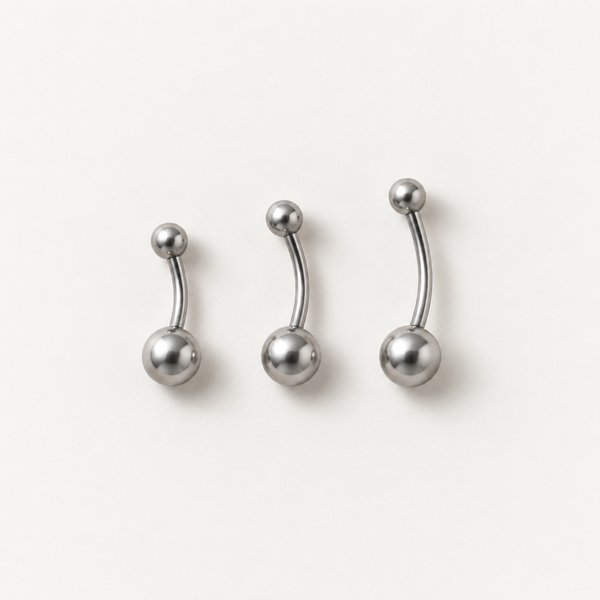
A 16g curved barbell, 8mm long, in implant-grade titanium, with a small ball on each end. That is the standard initial jewellery in almost every UK studio. A few piercers use 10mm on a large rook, and a few use 18g on a small one.
A curved barbell, also called a banana bar, is a bar bent into a gentle arc. The rook is a ridge, so the piercing enters at the top of the fold and exits underneath it, and the two holes are not in a straight line. A curved bar follows that path with a ball sitting flat against the skin at each end. A straight bar in a rook would stand off the cartilage at an angle and press on the edge of each hole.
The initial 8mm allows for swelling, which on a rook is considerable. Once the swelling settles, the bar is downsized to 6mm so the balls sit close and the bar stops moving. That is a piercer job and it matters more on a rook than almost anywhere else: an overlong bar in a rook rocks with every touch and is the main reason rooks develop bumps.
For the difference between curved, straight and circular barbells, see the barbells guide.
What size is a rook piercing?
16g (1.2mm), with a 6mm curved barbell once healed and 8mm during healing. Rings, once healed, are 6mm to 8mm inner diameter. Balls on a rook bar are usually 3mm; anything bigger crowds the fold.
| Stage | Gauge | Jewellery | Size |
|---|---|---|---|
| Fresh, weeks 0 to 12 | 16g (some 18g) | Curved barbell | 8mm, occasionally 10mm |
| Settled, 3 to 12 months | 16g | Curved barbell | 6mm |
| Fully healed, 12 months onward | 16g | Curved barbell or hinged ring | 6mm bar, or 6mm to 8mm ring |
| Faux rook (see below) | 16g | Flat-back labret | 6mm to 8mm post |
The measurement on a curved barbell is the length of the bar between the balls, following the curve. Inner diameter on a ring is the gap inside the ring. For how to measure a piece you already own, see the Body Jewellery Size Chart.
When can I put a ring in my rook?
Not before the piercing has fully healed, which for a rook is 6 to 12 months and frequently longer. Most piercers advise the full year. A rook looks settled long before the channel inside the cartilage has finished forming.
The rook heals slowly because the cartilage is thick and the fold is constantly moved by anything that touches the ear. A ring makes that worse: it rotates through the channel with every knock, dragging bacteria and dried lymph through unfinished tissue. That is how rook bumps start, and rook bumps are stubborn.
A rook is ready for a ring when all of these are true for at least a month: no tenderness when pressed, no swelling, no crust or discharge, no redness, no bump past or present, and the curved bar has been downsized to 6mm and is comfortable. If any one is missing, stay in the bar.
| Sign | Ready for a ring | Not yet |
|---|---|---|
| Time since piercing | 12 months, or 9 at the very least | Under 9 months |
| Tenderness when pressed | None | Any |
| Swelling | None | Any |
| Crust or discharge | None for a month or more | Present |
| Bump | None for at least two months | Present or recent |
| Current bar | Downsized to 6mm, comfortable | Still at healing length |
If you have already switched to a ring and the rook has flared, go back to the curved barbell, clean with saline twice a day and leave it alone. Most early flare-ups settle within a few weeks in a bar.
What size ring for a rook?
6mm for most rooks, 7mm or 8mm if the fold is deep or the piercing sits further from the edge. Larger than 8mm and the ring swings, catches and sits at an angle. The rook has very little room, so a snug ring is the goal.
The fold of the rook is usually 4mm to 6mm deep from the piercing hole to the edge. Add 1mm to 2mm of clearance and the whole sensible range is 6mm to 8mm. A hinged clicker is the right style: it opens on a hinge, needs no bending in a place where you cannot get a grip, and the seam hides inside the fold.
| Depth of fold from hole to edge | Snug fit | Standard fit |
|---|---|---|
| Under 4mm | 5mm | 6mm |
| 4mm to 5mm (most rooks) | 6mm | 7mm |
| 5mm to 7mm (deep fold) | 7mm | 8mm |
The plain Hinged Segment Clicker Ring in Silver comes in 6mm, 7mm and 8mm, and in 18g as well as 16g, which covers every rook in the table.

The same ring in black PVD titanium, the Hinged Segment Clicker Ring in Black, sits well in the shadow of the fold if you want the ring to read as a line rather than a highlight.

Curved barbell or ring: which looks better in a rook?
A curved barbell shows two small balls, one above the fold and one below, and is the more discreet option. A ring wraps the fold and is more visible from the front. Both suit the rook; the bar is the practical choice and the ring is the one most people are waiting for. Plenty of people keep a bar permanently because it is comfortable and never catches.
| Curved barbell | Hinged ring | |
|---|---|---|
| Safe while healing | Yes | No |
| Look | Two balls, bar hidden in the fold | Ring wrapping the fold, visible from the front |
| Catches on hair, hats, glasses | Rarely | Sometimes |
| Sleeping on it | Tolerable | Presses the ring into the fold |
| Moves in the channel | Very little | Rotates when touched |
| Changing it yourself | Fiddly; the balls are small and the fold is tight | Easier with a hinged ring |
| Decorative options | Gem or plain balls | Plain, beaded or front-faced designs |
A decorated ring like the Crescent Moon Face High Polished Segment Ring in Gold at 8mm suits a deeper rook; the face sits on the front of the fold and the plain part of the ring tucks behind.

How do I change rook jewellery?
A rook is one of the few piercings worth leaving to a piercer for the first ring, because you cannot see the underside of the fold in a mirror and the bar's balls are tiny. Once you have done it once, a hinged ring is manageable at home; a curved barbell is harder. Gloves, saline and a second mirror help more here than anywhere.
The curved bar is the awkward one. The lower ball sits underneath the fold, where you cannot see it and can barely reach it. Unscrewing it means gripping a 3mm titanium ball with a fingertip in a space the width of a pencil. Nitrile gloves give you the grip; a hand mirror held below the ear gives you the view. Feed the new bar in following the curve of the old one, downward from the top of the fold, and screw the ball on underneath with the bar already in place.
A hinged ring goes in from the top of the fold, rotates through and clicks shut with the seam inside the fold. It is easier than the bar because there is nothing to unscrew underneath. The full method for both is in the changing guide.
How do I sleep, wash and live with a rook?
Sleep on the other side or use a travel pillow with the ear in the gap, keep hair off it, and be careful with hats, headbands and glasses arms. Over-ear headphones sit around the rook rather than on it and are usually fine. The rook is protected inside the ear, which helps, but anything that presses the top of the ear folds it directly onto the piercing.
Sleeping is the main risk. Pressure on the fold pushes the bar sideways, and over months that drifts the angle and irritates the channel. A travel pillow with the ear in the hole removes the pressure entirely. Hats and beanies that pull down over the ears do the same thing as a pillow; wear them loose or off that ear while healing.
Cleaning is sterile saline twice a day and nothing else. The fold traps dried lymph, so let the saline soak for a minute before rinsing rather than picking. Do not turn the bar. Once healed, a rinse in the shower is enough, plus a monthly check that both balls are tight.
What is a faux rook and what jewellery does it take?
A faux rook is a flat-back labret pierced straight through the ridge from front to back, rather than a curved barbell through the fold. It is offered when someone's rook is too shallow to pierce properly. It takes a 16g labret at 6mm to 8mm, and it does not take a ring. It looks like a rook from the front and heals like a helix.
Not every ear has a rook that can be pierced. The fold has to be deep and well-defined enough for a curved bar to sit inside it; on a shallow rook a piercer will suggest the faux version. The trade-off is that a faux rook is a single hole through the ridge with a disc at the back, so it will never wear a ring around the fold. If a ring is what you want, ask the piercer to check your anatomy before you book.
Common rook jewellery mistakes
Putting a ring in before a year. The rook is the slowest-healing common ear piercing, and a ring is the most common cause of a rook bump.
Skipping the downsize. An 8mm bar in a settled rook rocks with every touch. Get it shortened to 6mm at 8 to 12 weeks.
Buying a straight barbell. The rook is a fold. A straight bar sticks out at an angle and presses on the holes. Curved only.
Buying a ring bigger than 8mm. It swings and catches. 6mm is right for most rooks.
Big balls or big gems. 3mm balls, small tops. The fold has no room.
Sleeping on it or wearing tight hats. Both fold the ear onto the piercing. Other side, loose hats, travel pillow.
Changing the first ring yourself. You cannot see the underside of the fold. Let the piercer do the first swap and watch how they do it.
How Oxies does it
Every piece we sell is ASTM F136 implant-grade titanium, the material your rook was pierced with and the one cartilage heals best around. For a healed rook we stock hinged clicker rings in 6mm, 7mm and 8mm, in silver, gold and black, and in 18g as well as 16g, with decorated segment rings from 8mm. Every order is sterilised before it is posted. Rook rings start at £10, UK delivery is free over £25, and two pieces save 25% while three or more save 40%. Browse rook jewellery.
Frequently asked questions
What size curved barbell for a rook?
16g (1.2mm) at 8mm while healing and 6mm once the swelling has settled, with 3mm balls. Some piercers use 10mm on a large rook initially. If your bar sticks out well past the fold after three months, it has not been downsized and needs to be.
How long does a rook take to heal?
6 to 12 months for most people, and 12 to 18 months is not unusual. It is thick cartilage in a fold that is constantly moved by hats, hair, pillows and glasses. Do not judge healing by how it looks; judge it by the absence of tenderness, swelling, crust and bumps for at least a month.
Can I put a hoop in my rook?
Yes, once it has fully healed, which usually means a year. Use a 16g hinged clicker at 6mm, or 7mm to 8mm for a deep fold. A ring before then is the most common cause of rook bumps. If you already have a bump, stay in the curved barbell until it has been gone for two months.
Why does my rook keep getting a bump?
Most often because the bar is too long and rocking, because a ring went in too early, or because it is being pressed on in your sleep. Fix the cause: downsize the bar to 6mm, swap a ring back to a bar, sleep on the other side, and clean with saline twice a day. If it is hot, very swollen or discharging, see your piercer or GP.
Does a rook piercing hurt?
More than a lobe or helix, usually rated 6 to 7 out of 10, because the cartilage is thick and the needle passes through a fold. The sharp part is brief. Throbbing and pressure for a few days afterward is normal, and the rook is tender to the touch for weeks.
Can I wear a straight barbell in my rook?
No. The rook is a fold of cartilage, so the entry and exit holes are not in line. A straight bar sticks out at an angle and puts pressure on the edge of each hole. Use a curved barbell, or a ring once healed.
What is the difference between a rook and a daith?
The rook is the fold of cartilage above the daith, between the inner and outer bowl of the ear. The daith is the innermost fold, just above the ear canal. Both start with a curved barbell and both take small rings once healed, but the daith sits lower and takes a slightly larger ring, usually 8mm to 10mm, where the rook takes 6mm to 8mm.
Can I sleep on my rook piercing?
Not while it is healing, and even once healed it is uncomfortable. Sleep on the other side or use a travel pillow with the ear in the gap. Pressure on the fold is the main cause of angle drift and bumps in a rook.
Key takeaways
- A rook is pierced at 16g with an 8mm curved barbell, downsized to 6mm at 8 to 12 weeks. The curve is not optional.
- Healing takes 6 to 12 months and often longer. Bar for the whole of that time.
- Rings go in only when fully healed. 6mm suits most rooks; 8mm for a deep fold; never larger.
- Hinged clickers are the easiest rook ring to fit because the seam hides inside the fold and nothing needs unscrewing underneath.
- Small balls and small tops. The rook has no room for anything oversized.
- Sleep on the other side, wear hats loose, keep hair off it.
- The first jewellery change is best done by a piercer; you cannot see the underside of the fold.
- A faux rook is a labret through the ridge and does not take a ring. Ask about your anatomy before you book.
Rook healed and ready for a ring? Browse titanium hinged rings in 6mm to 8mm from £10, sterilised and posted free in the UK on orders over £25.