

-
CZ Paved Pole Industrial Barbell in Silver - Titanium
Regular price £12.00Regular price £12.00 Sale priceUnit price per£7.20 with 3+ items -
Heart CZ Paved Industrial Barbell in Silver - Titanium
Regular price £13.00Regular price £13.00 Sale priceUnit price per£7.80 with 3+ items -
White Opal Centre Butterfly Chain Industrial Barbell in Silver - Titanium
Regular price £13.00Regular price £13.00 Sale priceUnit price per£7.80 with 3+ items -
Blue Opal Centre Butterfly Chain Industrial Barbell in Silver - Titanium
Regular price £13.00Regular price £13.00 Sale priceUnit price per£7.80 with 3+ items -
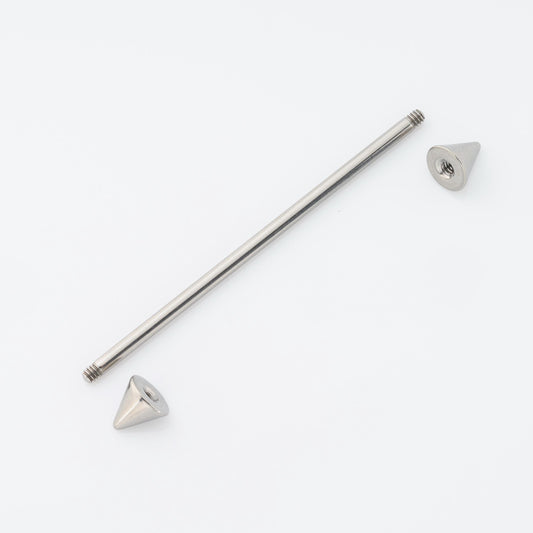
Barbell with Spike End Industrial Barbell in Silver - Titanium
Regular price £11.00Regular price £11.00 Sale priceUnit price per£6.60 with 3+ items -
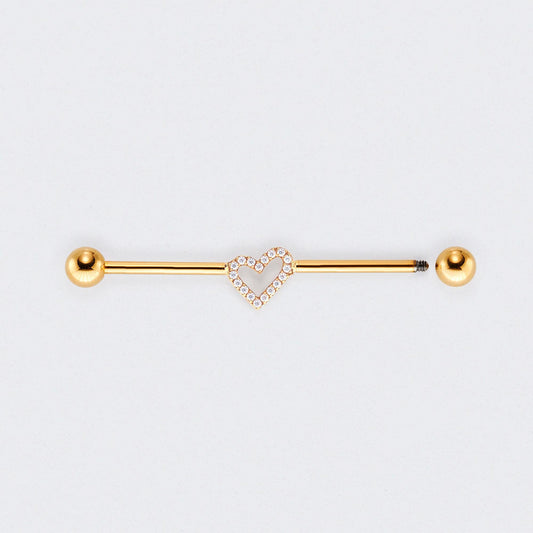
Heart CZ Paved Pole Industrial Barbell in Gold - Titanium
Regular price £13.00Regular price £13.00 Sale priceUnit price per£7.80 with 3+ items -
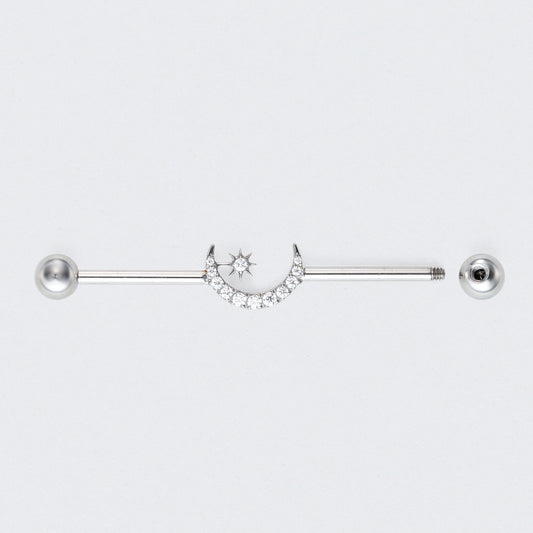
Crescent CZ Paved Pole Industrial Barbell in Silver - Titanium
Regular price £13.00Regular price £13.00 Sale priceUnit price per£7.80 with 3+ items -
CZ Centre Butterfly Chain Industrial Barbell in Silver - Titanium
Regular price £13.00Regular price £13.00 Sale priceUnit price per£7.80 with 3+ items -
Crescent CZ Paved Pole Industrial Barbell in Gold - Titanium
Regular price £13.00Regular price £13.00 Sale priceUnit price per£7.80 with 3+ items -
Double Triangle CZ with CZ Centre Pole Industrial Barbell in Silver - Titanium
Regular price £13.00Regular price £13.00 Sale priceUnit price per£7.80 with 3+ items

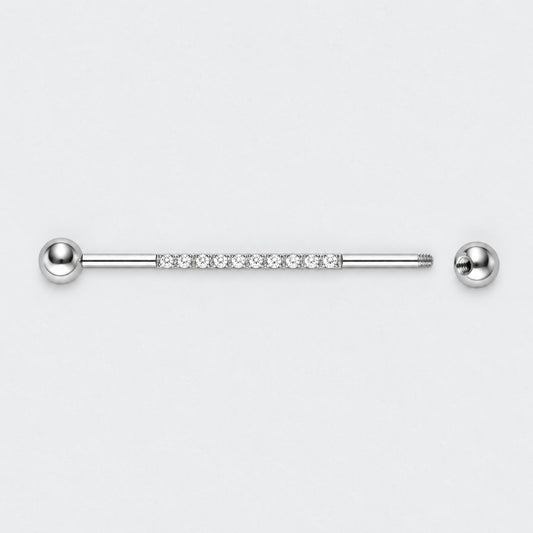

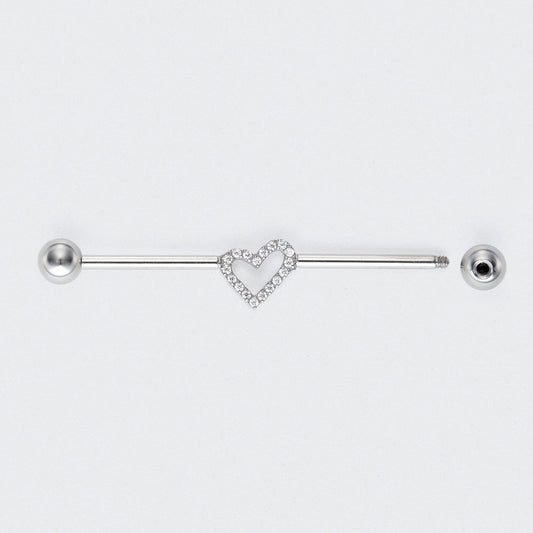

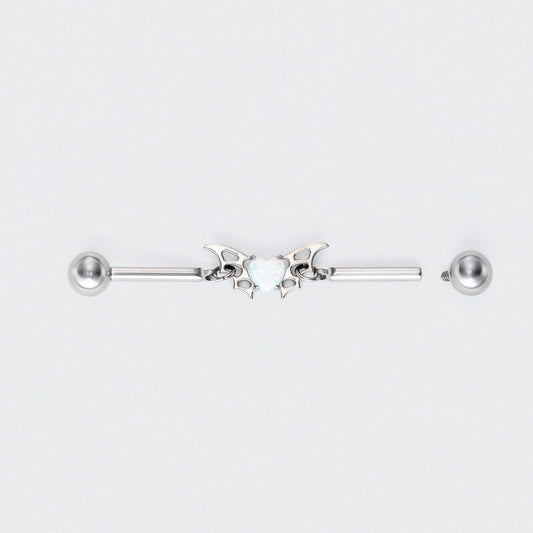

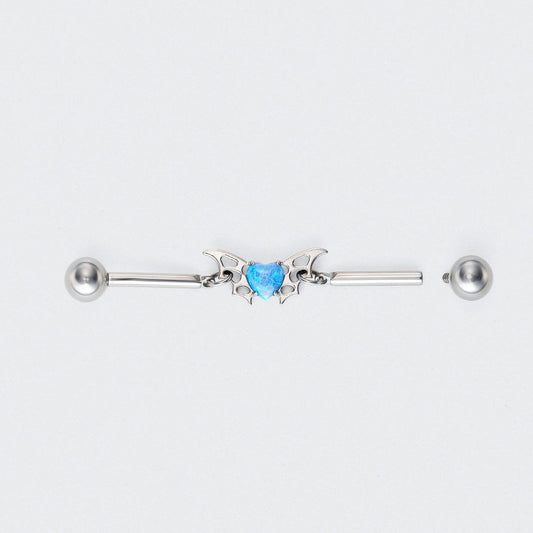





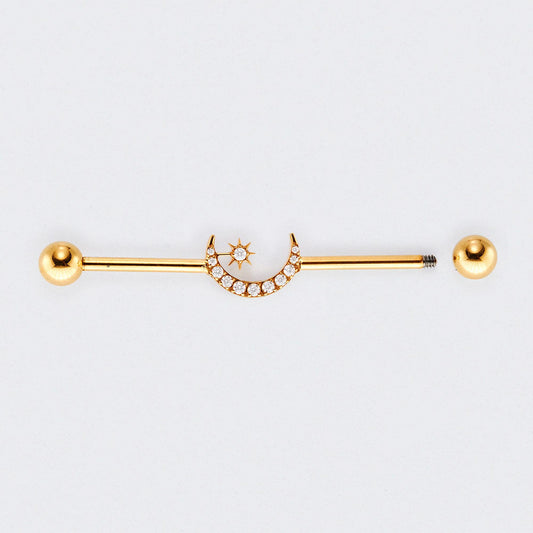

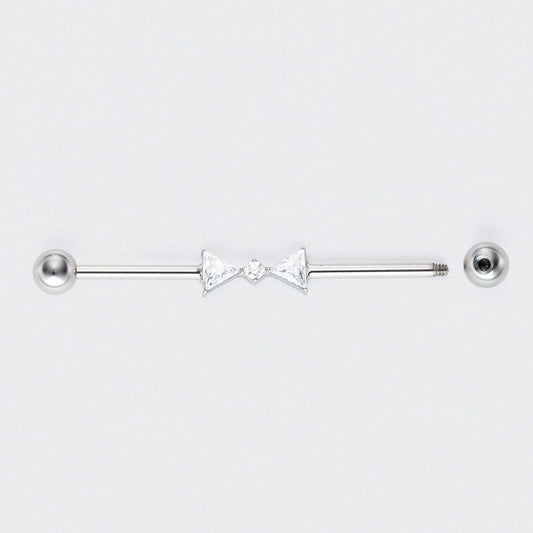
Collection: Industrial | Gauge: 14g (1.6mm) | Recommended Length: 32mm to 38mm straight barbells | Material: ASTM F136 Implant-Grade Titanium
The industrial piercing is two helix piercings on the upper ear, joined by a single long straight barbell that runs across the top of the cartilage. It is the most visible ear piercing there is, and it depends entirely on anatomy: the two holes have to line up at exactly the right angle for a straight bar to sit without pulling. Industrial jewellery is nearly always a 14g straight barbell with a ball, gem or spike at each end, sometimes with a charm or arrow design along the bar. Because the barbell crosses two cartilage piercings at once and is easy to knock, ASTM F136 implant-grade titanium is the only sensible choice for healing: it is nickel-free, hypoallergenic and roughly half the weight of steel, which takes real strain off the two holes.
What size barbell do I need for an industrial piercing?
An industrial piercing takes a 14g (1.6mm) straight barbell, and the length is measured to your ear, usually between 32mm and 38mm. The initial bar is often a few millimetres longer to allow for swelling, and your piercer will note the healed length at the downsize appointment. Measure your current barbell from the inside of one ball to the inside of the other, or ask your piercer, because a bar that is too short or too long will pull on the holes.
Industrial Jewellery: The Boldest Ear Piercing in Implant-Grade Titanium
UK piercers pierce industrials at 14g (1.6mm) and measure the bar to the individual ear, typically 32mm to 38mm, with a slightly longer bar fitted at first to allow for swelling. Healing is long, usually 9 to 12 months and sometimes longer, because two cartilage piercings are healing under tension at the same time. The most common problems are irritation bumps at one or both holes, caused by knocks, hair catching on the bar, sleeping on the ear or a barbell that is the wrong length. Some piercers heal the two holes separately with short labrets and fit the long bar later, which is worth asking about. Once healed, many people keep a lobe stud and a tragus labret simple so the industrial stays the focus, or add a conch piercing below it.
How long does an industrial piercing take to heal?
An industrial piercing takes 9 to 12 months to heal, and some take over a year. Two cartilage piercings are healing at once, joined by a bar that transfers any knock or pressure from one hole to the other. Keep hair tied back, sleep on the other side, avoid over-ear headphones and clean both ends with sterile saline twice a day. Do not change the barbell yourself during healing; a piercer should do the first swap once the swelling has gone.
Can anyone get an industrial piercing?
Not every ear suits an industrial. The piercing needs a well-defined outer ridge of cartilage with enough room for two holes that line up in a straight line, and a reputable piercer will check your ear before agreeing to do it. If the anatomy is not right, the bar sits under tension and the piercing is likely to reject or grow a bump. Alternatives include a vertical industrial, a conch-to-helix industrial or two separate helix studs.
Why does my industrial piercing keep getting bumps?
Industrial piercings get irritation bumps more than most because the long bar acts as a lever: a knock, a hairbrush or sleeping on the ear pushes on both holes at once. A barbell that is the wrong length, or one made of steel with nickel in it, makes this worse. Switch to a correctly measured implant-grade titanium barbell, protect the ear at night, keep hair off the bar and clean with saline. If a bump persists, ask your piercer about healing the two holes separately with short labrets first.