

-
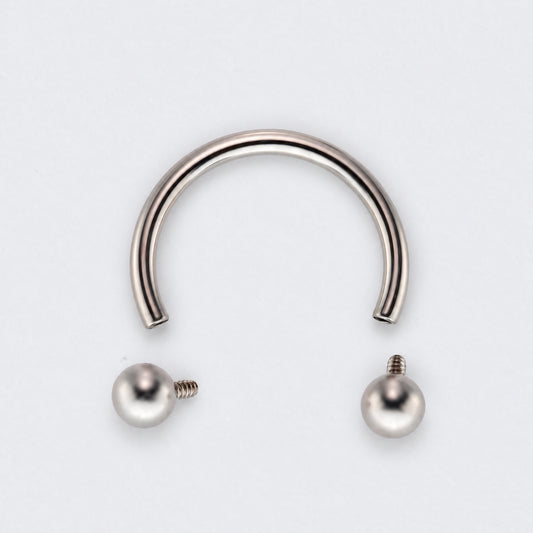
Circular Barbell with Balls Horseshoe in Silver - Titanium
Regular price £10.00Regular price £10.00 Sale priceUnit price per£6.00 with 3+ items -
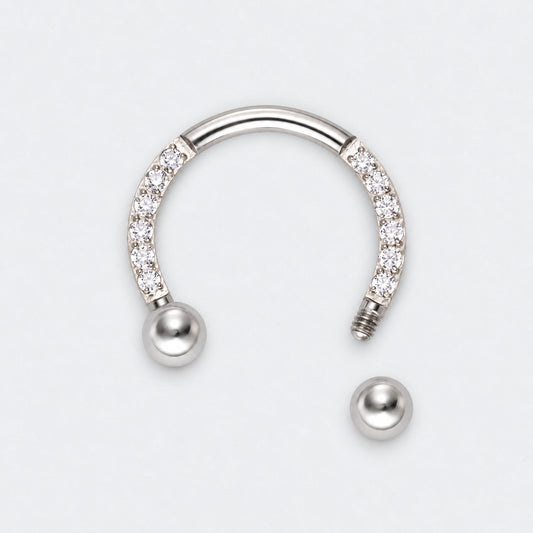
Circular Barbell with Balls CZ Front Facing Horseshoe in Silver - Titanium
Regular price £11.00Regular price £11.00 Sale priceUnit price per£6.60 with 3+ items -
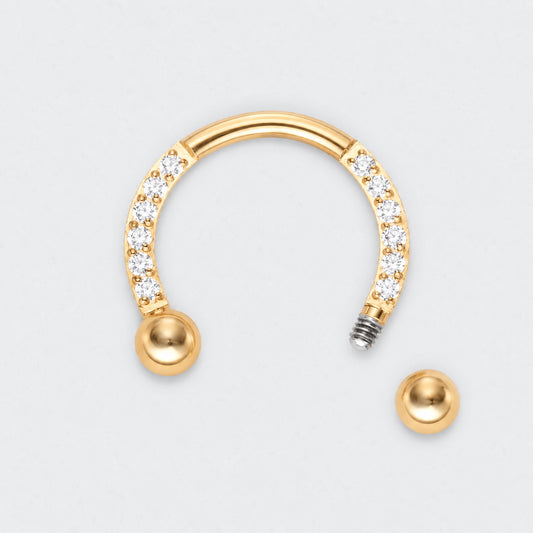
Circular Barbell with Balls CZ Front Facing Horseshoe in Gold - Titanium
Regular price £11.00Regular price £11.00 Sale priceUnit price per£6.60 with 3+ items -
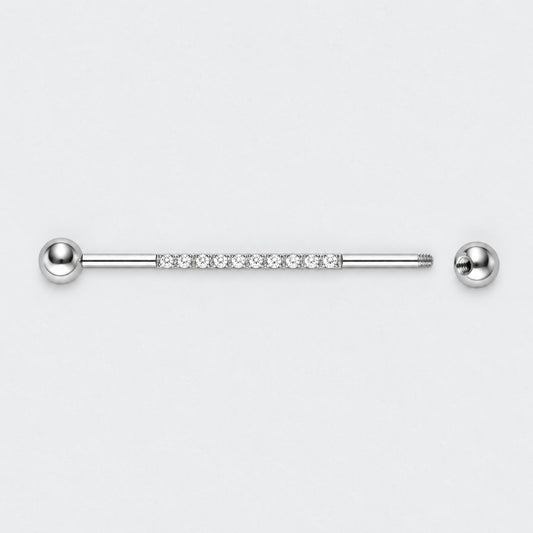
CZ Paved Pole Industrial Barbell in Silver - Titanium
Regular price £12.00Regular price £12.00 Sale priceUnit price per£7.20 with 3+ items -
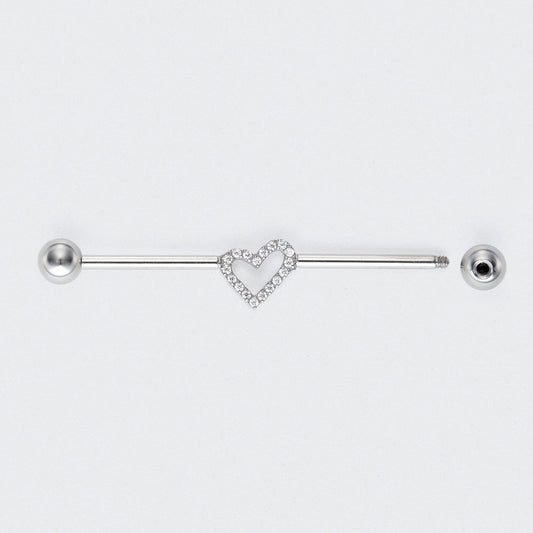
Heart CZ Paved Industrial Barbell in Silver - Titanium
Regular price £13.00Regular price £13.00 Sale priceUnit price per£7.80 with 3+ items -
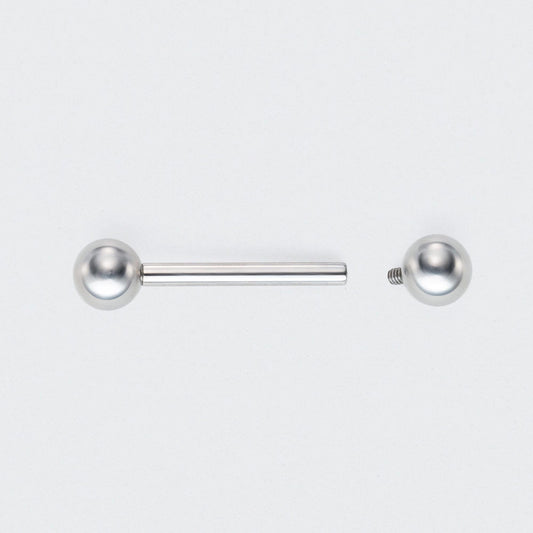
Straight Barbell with Balls in Silver - Titanium
Regular price £10.00Regular price £10.00 Sale priceUnit price per£6.00 with 3+ items -
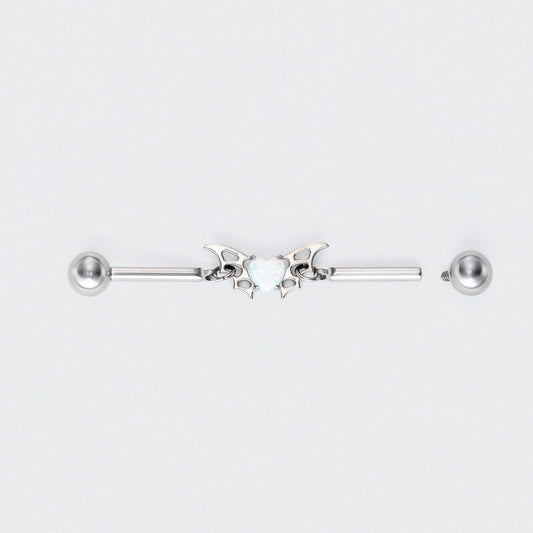
White Opal Centre Butterfly Chain Industrial Barbell in Silver - Titanium
Regular price £13.00Regular price £13.00 Sale priceUnit price per£7.80 with 3+ items -
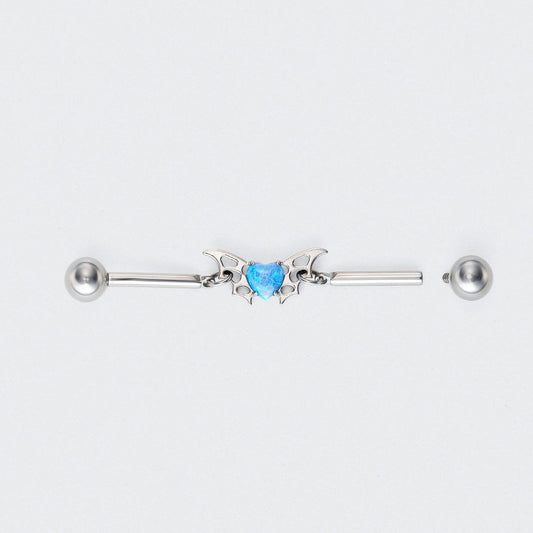
Blue Opal Centre Butterfly Chain Industrial Barbell in Silver - Titanium
Regular price £13.00Regular price £13.00 Sale priceUnit price per£7.80 with 3+ items -
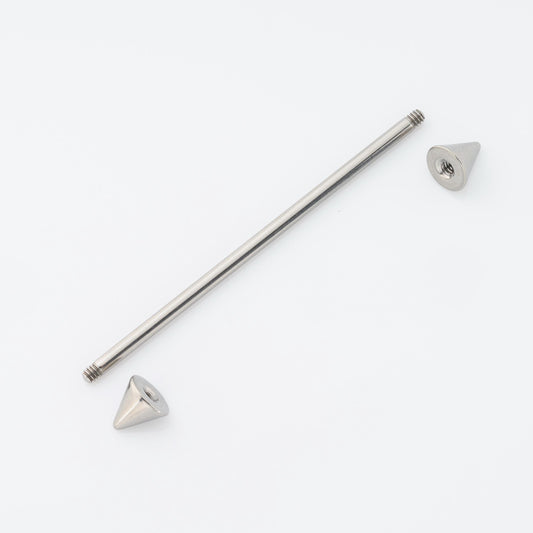
Barbell with Spike End Industrial Barbell in Silver - Titanium
Regular price £11.00Regular price £11.00 Sale priceUnit price per£6.60 with 3+ items -
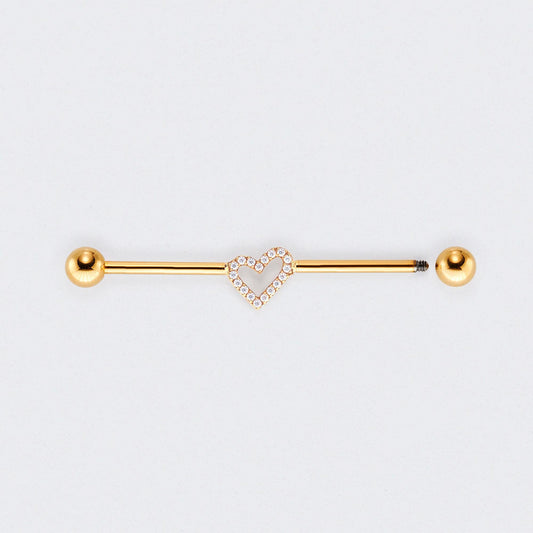
Heart CZ Paved Pole Industrial Barbell in Gold - Titanium
Regular price £13.00Regular price £13.00 Sale priceUnit price per£7.80 with 3+ items -
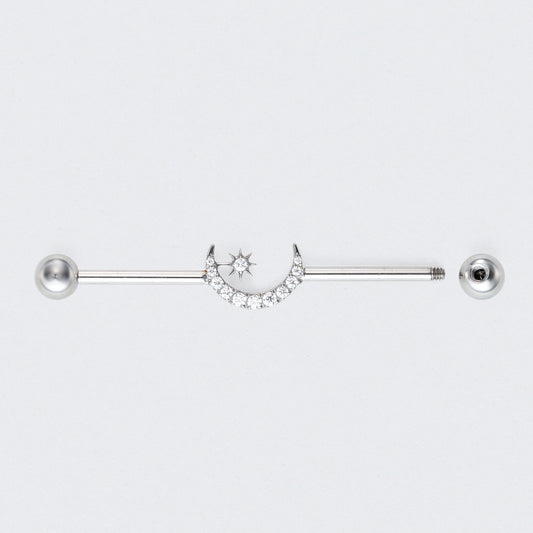
Crescent CZ Paved Pole Industrial Barbell in Silver - Titanium
Regular price £13.00Regular price £13.00 Sale priceUnit price per£7.80 with 3+ items -
CZ Centre Butterfly Chain Industrial Barbell in Silver - Titanium
Regular price £13.00Regular price £13.00 Sale priceUnit price per£7.80 with 3+ items -
Crescent CZ Paved Pole Industrial Barbell in Gold - Titanium
Regular price £13.00Regular price £13.00 Sale priceUnit price per£7.80 with 3+ items -
Double Triangle CZ with CZ Centre Pole Industrial Barbell in Silver - Titanium
Regular price £13.00Regular price £13.00 Sale priceUnit price per£7.80 with 3+ items













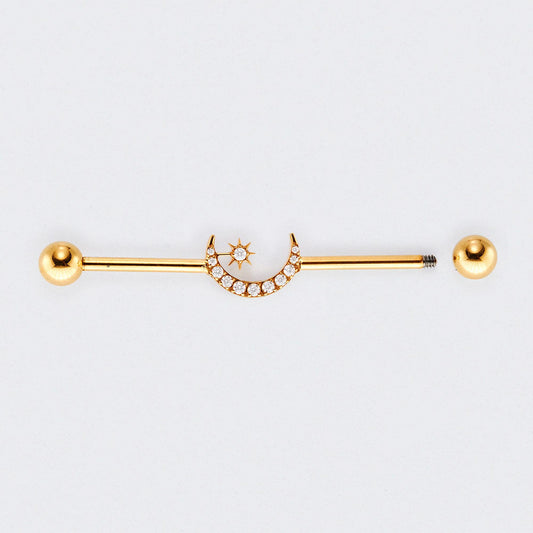

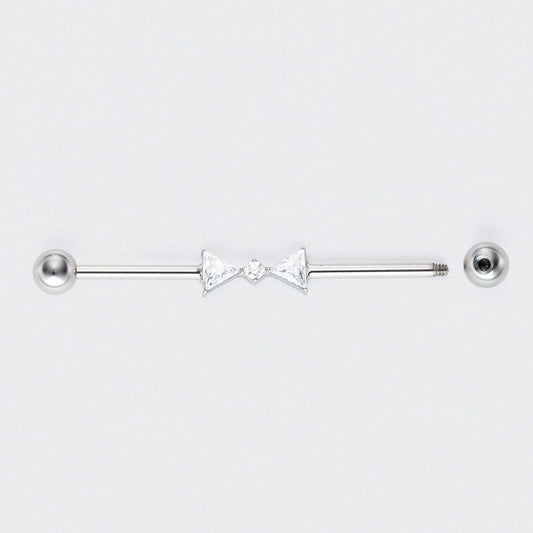
Collection: Barbells | Gauge: 16g (1.2mm), 14g (1.6mm) | Recommended Length: 6mm to 16mm (industrial bars 32mm to 38mm) | Material: ASTM F136 Implant-Grade Titanium
Barbells are the simplest piece of piercing jewellery: a bar with a ball, gem or disc on each end, and they come in three shapes that each suit different piercings. A straight barbell is used for the tongue, nipple, industrial and bridge piercings, and short straight bars work in a healed helix or lobe. A curved barbell follows a fold of tissue and is the standard jewellery for the rook, eyebrow and navel, where it is called a belly bar. A circular barbell, or horseshoe, is an open ring with a ball on each end and is the classic flip-up choice for a septum, and it also suits the daith and lip. Whatever the shape, ASTM F136 implant-grade titanium is the right material to wear day to day: nickel-free, hypoallergenic, half the weight of steel and free from the plating that flakes off fashion bars.
How do I measure a barbell?
Measure the length of the bar between the inside edges of the two balls, not the total length including the balls. For a curved barbell, measure in a straight line from one end to the other. Gauge is the thickness of the bar: 16g is 1.2mm and 14g is 1.6mm. Both numbers must match your piercing. If you are unsure, take the barbell you wear now out once the piercing is healed and measure it with a ruler, or ask your piercer to note the size for you.
Barbells: Straight, Curved and Circular Bars for Every Piercing in Implant-Grade Titanium
Barbells are sized by gauge and by the length of the bar between the two ends, not including the balls. UK piercers use 16g (1.2mm) for most ear and face placements and 14g (1.6mm) for the navel, tongue, nipple, industrial and many septums. Fresh piercings are fitted with a longer bar to allow for swelling and downsized a few weeks later, so a healed piercing usually wears 2mm less than it started with. Common mistakes include buying a bar of the right length but the wrong gauge, wearing a straight bar in a curved piercing so it presses on the exit holes, and losing balls because they were not screwed on firmly. Barbells are threaded, so ends can be swapped to change the look. For a hoop instead of a bar, see our segment and clicker rings, and for a flat-back stud see labrets.
Which barbell shape do I need for my piercing?
Use a straight barbell for the tongue, nipple, industrial, bridge and healed straight-through ear piercings. Use a curved barbell for the navel, rook, eyebrow and vertical labret, where the bar has to follow a fold of skin or cartilage. Use a circular barbell, or horseshoe, for the septum, daith, lip and some helix and lobe piercings where you want an open ring that is easy to flip or remove. Wearing the wrong shape puts pressure on the exit holes and slows healing.
Can I change the balls on a barbell?
Balls and gem ends on a threaded barbell unscrew, so you can swap them for different colours, sizes or shapes without changing the bar itself. Ends must match the thread of the bar: 16g and 14g bars use different threads, so a 14g ball will not fit a 16g bar. Hold the bar still, unscrew the end anticlockwise, screw the new end on clockwise and tighten it firmly with dry fingers. Check the ends are tight once a week, as they can loosen with wear.
Is titanium better than surgical steel for barbells?
Implant-grade titanium is the better choice for a barbell you wear every day. ASTM F136 titanium contains no nickel, so it will not cause the itching, redness or discolouration that surgical steel can trigger in sensitive skin, and it weighs about half as much, which matters for a long industrial bar or a nipple barbell. Surgical steel is acceptable for a healed piercing if you have no nickel sensitivity, but for a new piercing or a barbell worn for years, titanium lowers the risk of irritation.