

-
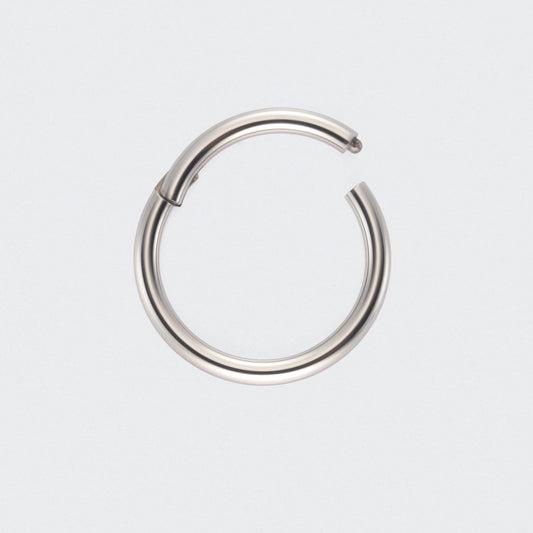
Hinged Segment Clicker Ring in Silver - Titanium
Regular price £10.00Regular price £10.00 Sale priceUnit price per£6.00 with 3+ items -
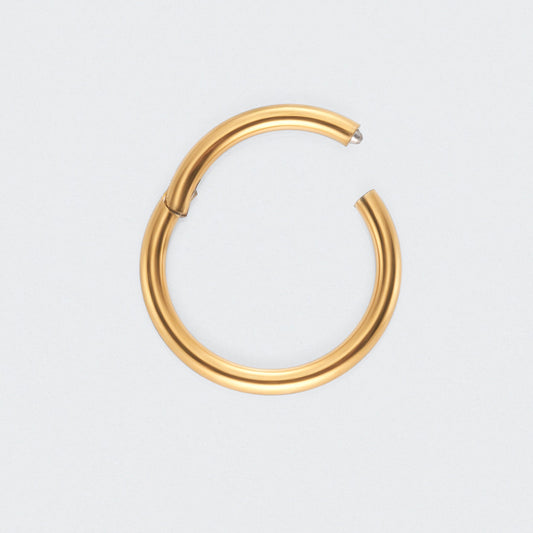
Segment Clicker Ring in Gold - Titanium
Regular price £10.00Regular price £10.00 Sale priceUnit price per£6.00 with 3+ items -
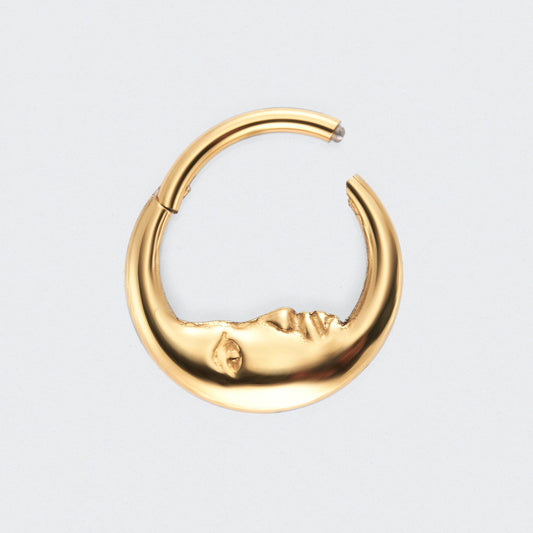
Crescent Moon Face High Polished Segment Ring in Gold - Titanium
Regular price £11.00Regular price £11.00 Sale priceUnit price per£6.60 with 3+ items -
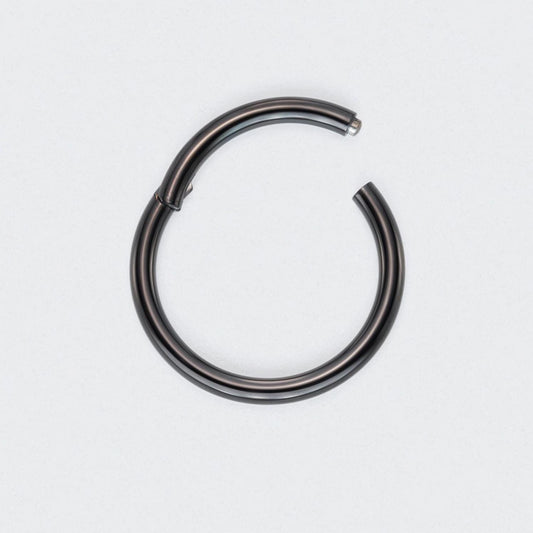
Hinged Segment Clicker Ring in Black - Titanium
Regular price £10.00Regular price £10.00 Sale priceUnit price per£6.00 with 3+ items -
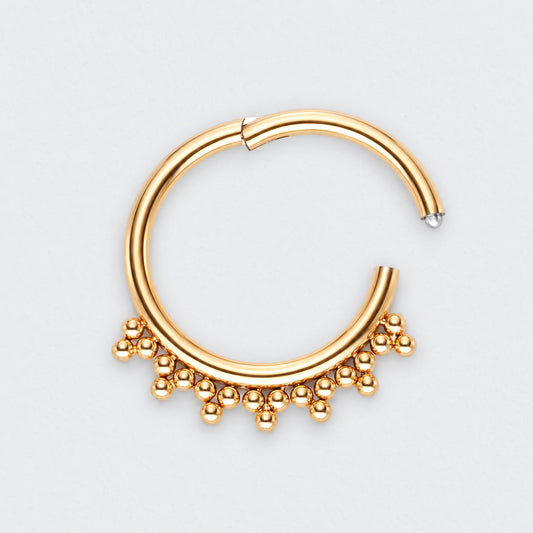
5 Tri-bead Clusters Hinged Segment Ring in Gold - Titanium
Regular price £12.00Regular price £12.00 Sale priceUnit price per£7.20 with 3+ items -
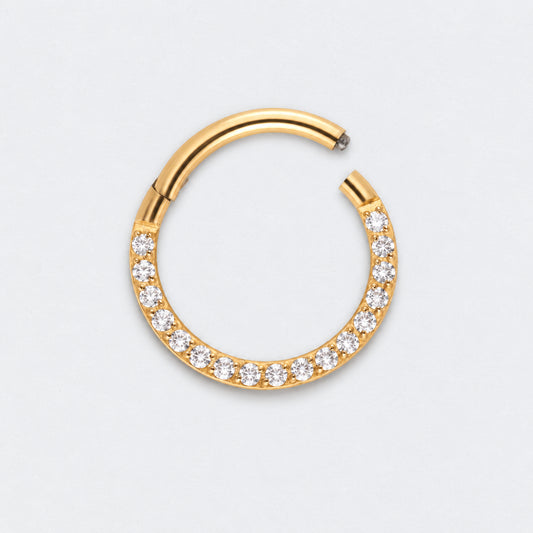
CZ Front Facing Segment Hinged Clicker Ring in Gold - Titanium
Regular price £12.00Regular price £12.00 Sale priceUnit price per£7.20 with 3+ items -
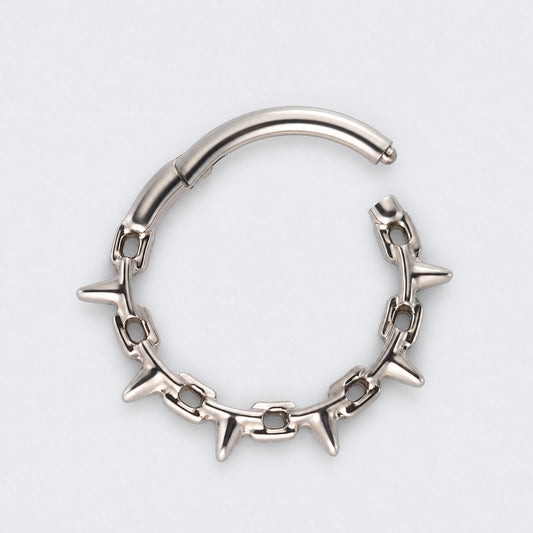
Chain & Spike Hinged Segment Hoop Ring in Silver - Titanium
Regular price £11.00Regular price £11.00 Sale priceUnit price per£6.60 with 3+ items -
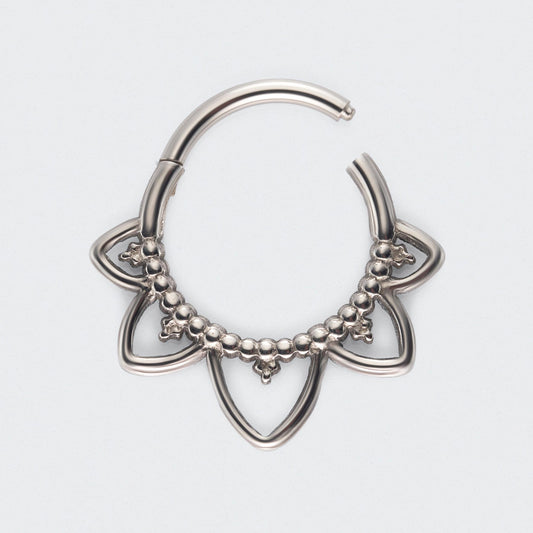
Floral Face Segment Hinged Clicker Ring in Silver - Titanium
Regular price £11.00Regular price £11.00 Sale priceUnit price per£6.60 with 3+ items -
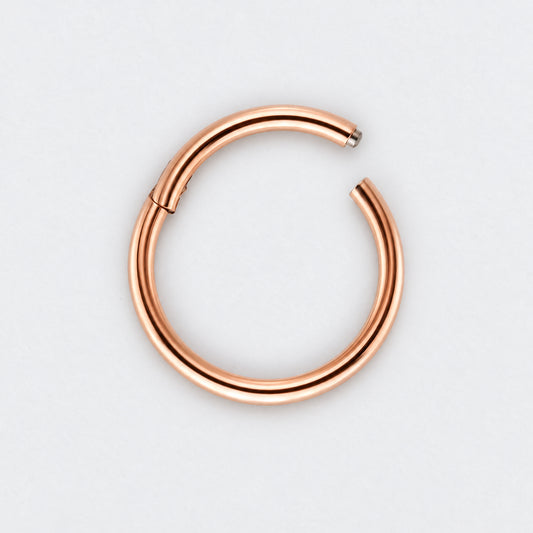
Segment Clicker Ring in Rose Gold - Titanium
Regular price £10.00Regular price £10.00 Sale priceUnit price per£6.00 with 3+ items -
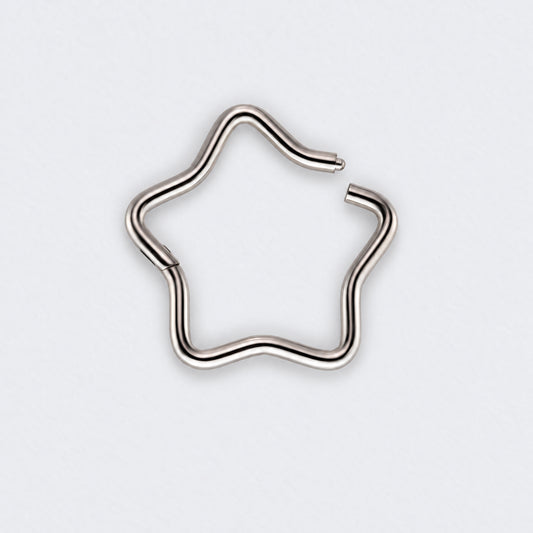
Star Shape Hinged Segment Hoop Ring in Silver - Titanium
Regular price £10.00Regular price £10.00 Sale priceUnit price per£6.00 with 3+ items -
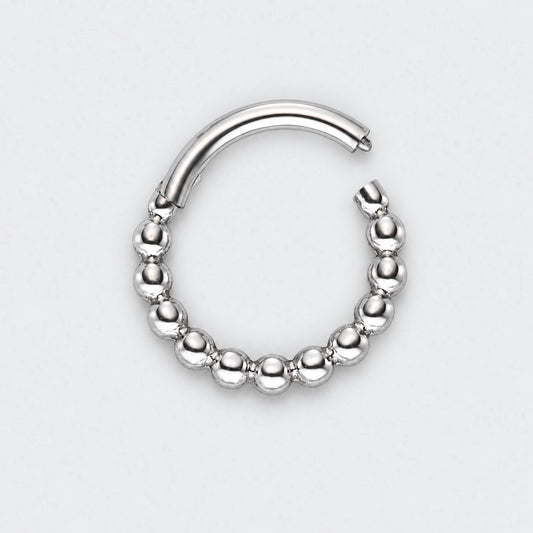
Cluster of Beads Hinged Segment Hoop Ring in Silver - Titanium
Regular price £11.00Regular price £11.00 Sale priceUnit price per£6.60 with 3+ items -
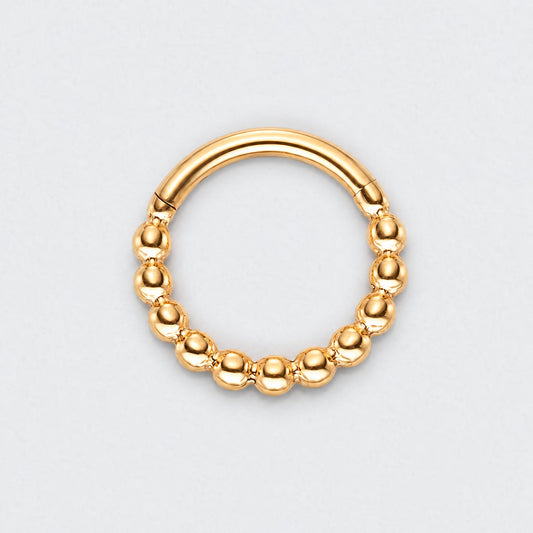
Cluster of Beads Hinged Segment Hoop Ring in Gold - Titanium
Regular price £11.00Regular price £11.00 Sale priceUnit price per£6.60 with 3+ items -
Front Face Cut Hinged Segment Ring in Silver - Titanium
Regular price £11.00Regular price £11.00 Sale priceUnit price per£6.60 with 3+ items -
Fake Gauged Chunky Moon Segment Ring in Silver - Titanium
Regular price £11.00Regular price £11.00 Sale priceUnit price per£6.60 with 3+ items -
Star Segment Ring in Silver - Titanium
Regular price £11.00Regular price £11.00 Sale priceUnit price per£6.60 with 3+ items -
V Shape Segment Hoop Ring in Silver - Titanium
Regular price £11.00Regular price £11.00 Sale priceUnit price per£6.60 with 3+ items -
White Opal and Clear CZ Side Facing Paved Hinged Segment Hoop Ring in Silver - Titanium
Regular price £12.00Regular price £12.00 Sale priceUnit price per£7.20 with 3+ items -
3 Tier Stacked Hinged Segment Clicker in Gold - Titanium
Regular price £11.00Regular price £11.00 Sale priceUnit price per£6.60 with 3+ items -
Floral Face Segment Clicker Ring in Gold - Titanium
Regular price £11.00Regular price £11.00 Sale priceUnit price per£6.60 with 3+ items -
D Shape Half Side CZ Paved Hinged Segment Clicker Ring in Silver - Titanium
Regular price £12.00Regular price £12.00 Sale priceUnit price per£7.20 with 3+ items -
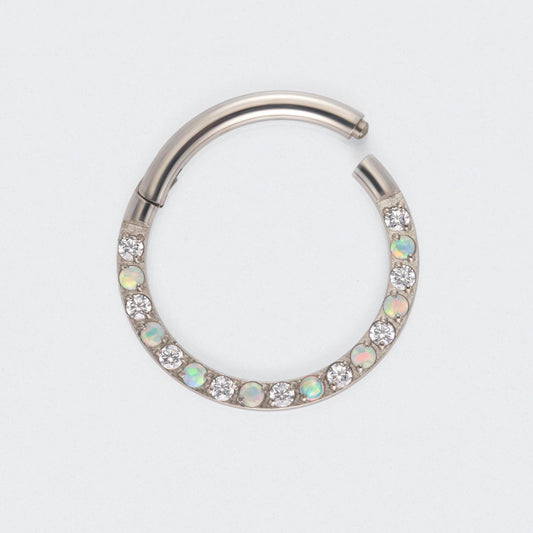
White Opal & Clear CZ Front Facing Hinged Segment Clicker Ring in Silver - Titanium
Regular price £12.00Regular price £12.00 Sale priceUnit price per£7.20 with 3+ items -
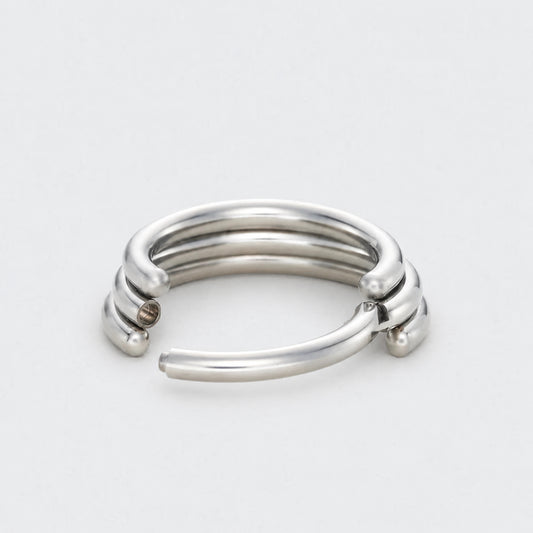
3 Tier Stacked Segment Hinged Clicker Ring in Silver - Titanium
Regular price £11.00Regular price £11.00 Sale priceUnit price per£6.60 with 3+ items -
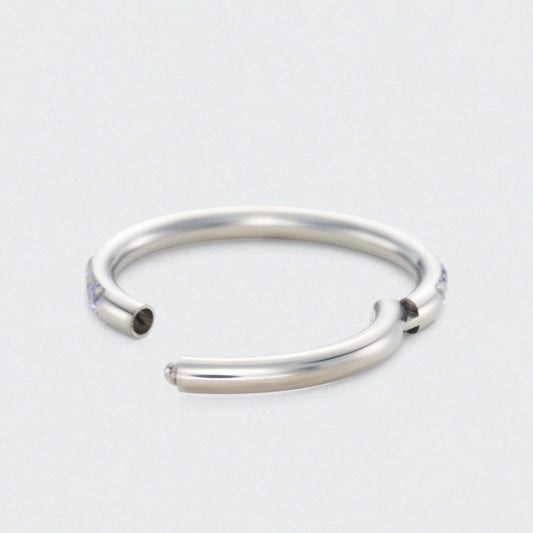
Purple CZ Side Facing Paved Hinged Segment Hoop Ring in Silver - Titanium
Regular price £12.00Regular price £12.00 Sale priceUnit price per£7.20 with 3+ items -
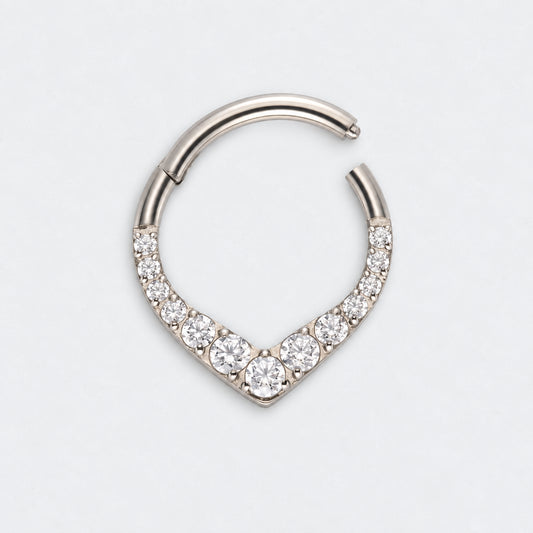
V Shape Teardrop CZ Front Facing Segment Hoop Ring in Silver - Titanium
Regular price £16.00Regular price £16.00 Sale priceUnit price per£9.60 with 3+ items













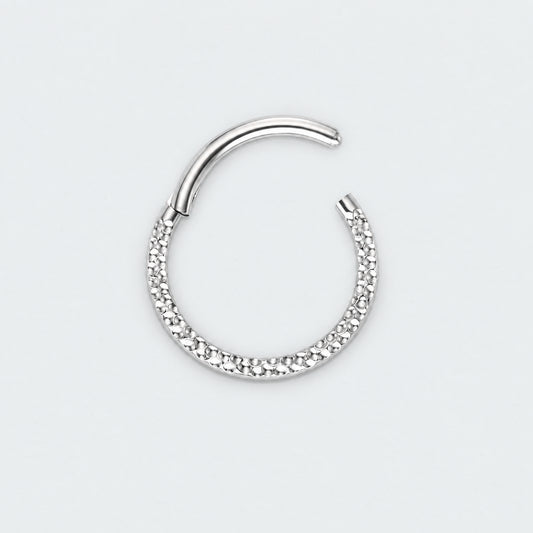

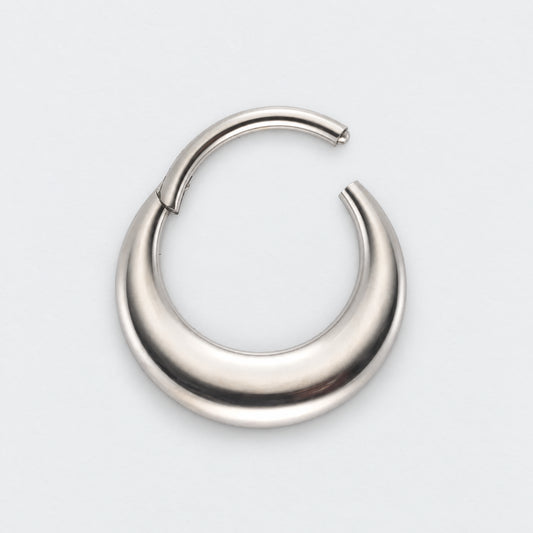

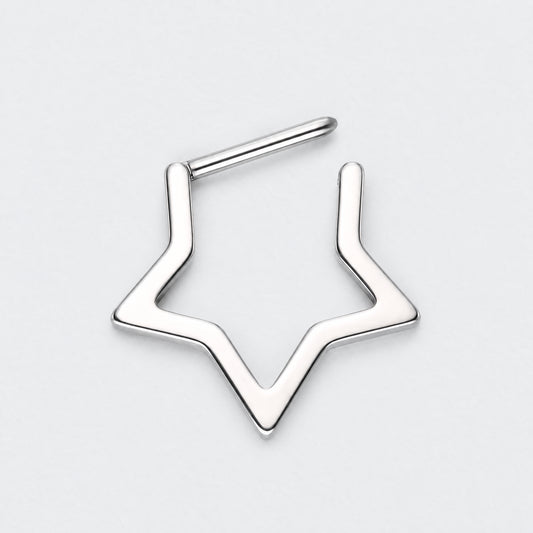

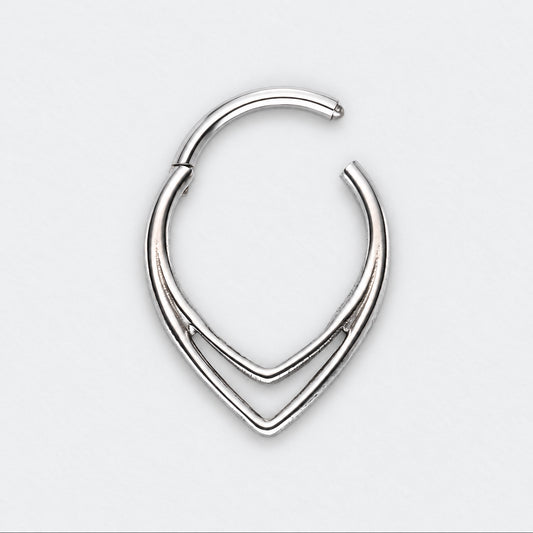

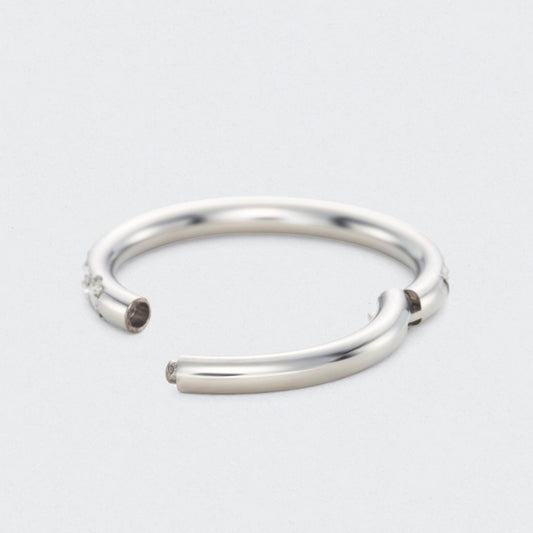

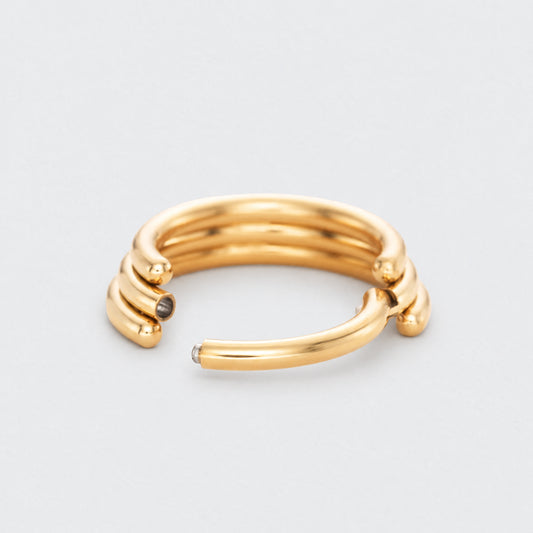

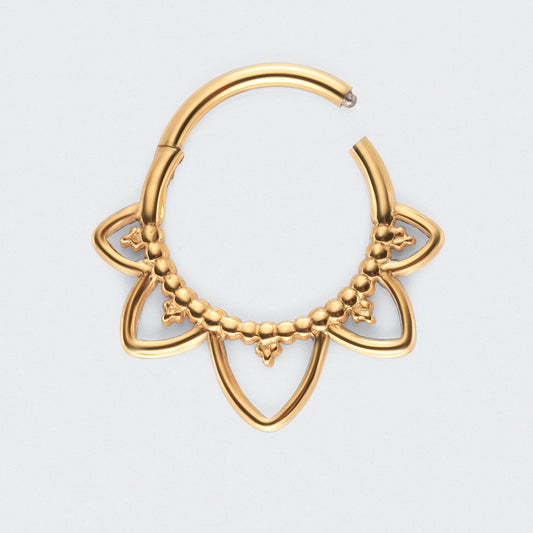

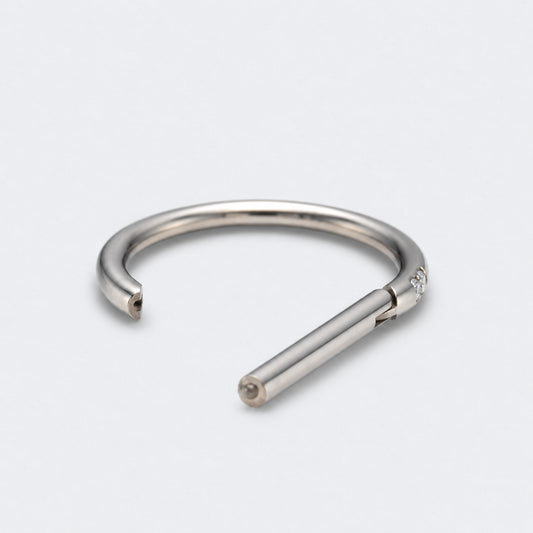




Collection: Segment & Clicker Rings | Gauge: 16g (1.2mm), 14g (1.6mm) | Recommended Diameter: 6mm to 12mm | Material: ASTM F136 Implant-Grade Titanium
Segment rings and clicker rings are the two hoop styles that give a continuous, seamless circle with no visible ball or gap. A hinged segment ring, usually called a clicker, has a small section that swings open on a hinge and clicks shut, so it can be fitted and removed in seconds without bending the ring. A seamless segment ring has a removable piece that pops out and is pressed back in. Both are the go-to hoop for a healed septum, daith, helix, conch or lobe piercing, and the front of a clicker is often set with gems, a chain or a shaped design. Because a ring moves through the piercing channel every time it is touched, ASTM F136 implant-grade titanium is the material to choose: it is nickel-free, hypoallergenic, light and will not tarnish or go dull with wear.
What size segment ring do I need?
You need to match two numbers: gauge and inner diameter. Gauge is the thickness of the ring and must be the same as your piercing, usually 16g (1.2mm) for ear and nose and 14g (1.6mm) for septum. Inner diameter is measured across the inside of the hoop: 6mm for nostrils and thin helix placements, 8mm for most helix, daith, lobe and septum piercings, and 10mm to 12mm for conch hoops. If a ring is currently in the piercing, measure across its inside edge to edge.
Segment and Clicker Rings: The Cleanest Hoop for Any Piercing in Implant-Grade Titanium
Rings need two measurements to fit: the gauge, which must match your piercing, and the inner diameter, which decides how snug the hoop sits. UK piercers fit most ear and nose piercings at 16g (1.2mm), with 14g (1.6mm) common for septum and stretched lobes. Diameters run from 6mm for a tight nostril or thin helix, through 8mm for most ear placements and the septum, to 10mm and 12mm for conch hoops and a lower septum hang. The usual mistakes are wearing a ring in a piercing that has not healed, choosing a diameter so small it pinches, and forcing a hinge open too far so it no longer clicks. Clickers are far easier to change at home than seamless rings, which most people have a piercer fit. For a stud look in the same piercing, see our flat-back labrets, or pair a ring with a tragus stud for contrast.
What is the difference between a clicker and a segment ring?
A clicker is a hinged segment ring: one section is attached by a tiny hinge and clicks closed, so the ring opens and shuts like a door and can be changed without tools. A seamless segment ring has a loose section that is removed completely, and the ring is gently flexed to fit it back in. Both look identical when closed. Clickers are easier for home changes and larger decorative fronts; seamless segment rings have no hinge to wear out but are best fitted by a piercer.
How do I open and close a clicker ring?
Hold the ring with the hinge at the top and gently pull the hinged segment away from the fixed part until it swings open. Guide the open ring through the piercing, then press the segment back until you hear and feel it click. Do not force the hinge past where it stops naturally, and never twist the ring sideways. If it does not click shut, the segment is slightly out of line; open it again and close it squarely. Only change a ring in a fully healed piercing.
Can I wear a ring in a new piercing?
Rings are not recommended for most fresh piercings, apart from the daith and septum, which are pierced with a ring because of their shape. A ring rotates through the channel and drags bacteria and crust into the wound, which slows healing and can cause bumps in the helix, conch, nostril and lobe. Heal those with a flat-back labret and switch to a titanium segment ring or clicker once your piercer confirms the piercing has settled.