Quick Answer: No — keep a new piercing out of pools, the sea, lakes and hot tubs for at least the first 4 weeks, and ideally until it has fully healed: around 6 to 8 weeks for earlobes and 6 to 12 months for cartilage and navels. Submerging a healing wound in shared or natural water is the risk; showers are fine from day one. If a swim is unavoidable, cover the piercing with a waterproof dressing, keep the dip short, remove the dressing straight after, and rinse the piercing with sterile saline. Never take the jewellery out to swim — a fresh hole can tighten within hours.
Informational only, not medical advice. If a piercing is hot, swollen, weeping or increasingly painful, see your piercer or GP.
A new piercing is a healing wound with jewellery in it, and every body of water you might swim in — chlorinated, salted or natural — is shared with other people, animals or both. The question is not whether water touches the piercing, since showers are harmless, but whether the piercing soaks in water that carries bacteria.
This guide gives the wait times by piercing, ranks pools, sea, lakes and hot tubs by risk, and covers the real-life cases where the advice collides with your plans: the booked holiday, the gym routine, the festival weekend. The APP and the NHS both publish guidance on this, and the advice below stays inside it.
Can you swim with a new piercing?
Not for at least the first 4 weeks, and the safest answer is not until it has fully healed. The Association of Professional Piercers advises keeping healing piercings out of pools, hot tubs and open water, and NHS guidance on piercing aftercare says the same: avoid swimming while the piercing heals.
The reason is mechanical as much as biological. Soaking softens the healing tissue around the channel, the way fingertips wrinkle in the bath, and softened tissue is easier for bacteria to enter. The water itself then supplies the bacteria: pseudomonas in inadequately chlorinated pools and hot tubs, a wider mix in rivers, lakes and the sea.
A swim does not guarantee an infection — plenty of people get away with it. But an infected piercing can mean weeks of setback, a lost piercing, or in rare cases something a GP needs to treat with antibiotics, against which a postponed swim is cheap.
How long should I wait, by piercing?
Until the piercing is fully healed, which ranges from 6 to 8 weeks for earlobes to 6 to 12 months for cartilage and navels — and 4 weeks as the absolute minimum for any piercing if you accept some risk. Healing times vary by person, so treat these as ranges, not promises.
| Piercing | Typical full healing | Earliest swim worth risking | Notes |
|---|---|---|---|
| Earlobe | 6 to 8 weeks | 4 weeks, covered | Fastest healer of the lot |
| Helix, tragus, conch, rook, daith | 6 to 12 months | 2 to 3 months, covered | Cartilage punishes shortcuts |
| Nostril | 2 to 4 months | 6 to 8 weeks, covered | Hard to cover; keep dips short |
| Septum | 2 to 3 months | 6 to 8 weeks | Inside the nose, easier to keep dry |
| Lip and philtrum | 2 to 3 months | 6 to 8 weeks | Mouth side adds its own flora |
| Navel | 6 to 12 months | 3 months, covered | Sits in swimwear waistbands; slowest to forgive |
| Industrial | 9 to 12 months | 3 months, covered | Two holes, double the entry points |
"Covered" means a waterproof dressing over the piercing for the duration of the swim, not a permanent fix. And "fully healed" means healed by the calendar and by feel: no tenderness, no discharge, no swelling for several weeks — not just the day it stops hurting, which comes much earlier in the process.
Which is worse: pools, sea, lakes or hot tubs?
Hot tubs are the worst, then lakes and rivers, then the sea, then a well-maintained pool — but none of them are safe for a healing piercing. Warmth, stillness and crowds are what grow bacteria, and a hot tub has all three.
| Water | Risk | Why |
|---|---|---|
| Hot tub, jacuzzi | Highest | Warm, shared, recirculated; pseudomonas thrives at hot-tub temperatures |
| Lakes, rivers, ponds | High | Untreated fresh water; runoff, wildlife, stagnant patches |
| The sea | Moderate to high | Cleaner in open water, worse near crowded beaches and river mouths |
| Swimming pool | Moderate | Chlorine kills much but not everything, and it irritates healing skin |
| Your own shower | Fine from day one | Running water, not shared, not soaked in |
| Your own bath | Fine if the piercing stays above water | A clean tub, a short soak, piercing kept dry |
Two common beliefs need correcting here. Chlorine does not make a pool sterile; it reduces bacteria, and it also dries and irritates the healing channel, so a chlorinated swim can set a piercing back without any infection. And the sea is not "good for piercings" — that myth is covered below.
What if I have to swim — holiday, race or lessons?
Cover the piercing with a waterproof dressing, keep the swim short, remove the dressing as soon as you are out, rinse the piercing with sterile saline and let it air-dry. This reduces the risk; nothing removes it.
| Step | What to do |
|---|---|
| Before | Clean the piercing with sterile saline; apply a waterproof plaster or sealed dressing over dry skin |
| During | Keep it brief; avoid putting your head under for ear, nose and lip piercings |
| After | Remove the dressing straight away — a wet dressing traps water against the wound |
| Then | Rinse the piercing with sterile saline, pat dry with clean kitchen roll, leave it alone |
| Days after | Watch it: increasing redness, heat, swelling or weeping means piercer or GP |
Waterproof dressings hold best on flat, dry skin — a lobe, a navel, the flat of the chest — and poorly on nostrils and ears full of curves, which is why the table above says to keep heads above water. For a child's swimming lessons or a race you cannot move, this routine plus a short exposure is the practical compromise; for a holiday booked three weeks after a piercing appointment, the better fix is to move the piercing appointment.
One thing never to do: take the jewellery out for the swim. A healing hole can tighten in hours, and you will come back from the pool to a piercing that no longer accepts its jewellery — that is how piercings are lost. If it has already shrunk, never force anything through; a piercer can reopen it properly with a taper.
Can I go to the gym with a new piercing?
Yes, from the day after piercing — sweat is your own and rinses off, so the gym is far safer than any pool. The rules are about friction and shared surfaces, not the sweat itself.
Shower soon after training and rinse the piercing with saline if it got properly sweaty. Keep the piercing off shared equipment: a towel between a helix and the bench, and wipe-downs before mats touch a navel. Skip anything where the jewellery takes impact or snags — scrum sports, grappling, anything with helmets or headgear against an ear piercing for the first weeks.
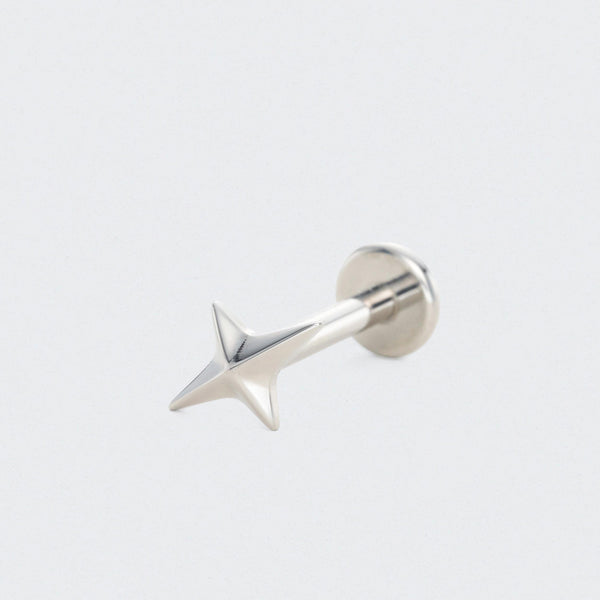
Secure jewellery helps here. A flat-back labret with a fixed disc, like the Star Labret in Silver at £10, has no butterfly back to catch a towel and no dangling parts, which is one reason piercers fit flat-backs rather than earrings in the first place.
The gym's one water hazard is the one this article is about: the pool, steam room, sauna and jacuzzi attached to it. Steam rooms and saunas soften healing tissue in shared humid air — treat them like the hot tub and wait.
What about festivals, camping and travel?
A new piercing survives a festival fine if you pack saline and keep your hands off it — the danger is dirty hands, not dirty fields. The piercing does not need to be babied; it needs the same two cleans a day it gets at home.
Pack sterile saline in spray form, some clean kitchen roll, and a small mirror. Spray mornings and evenings as usual; after a dusty or muddy day, an extra rinse does no harm. Hand sanitiser is for your hands before any contact with the piercing, never for the piercing itself — alcohol on a healing wound stings and sets it back.
The festival-specific risks are mechanical: crowds, hugs, pulled-on hoodies and shared tents full of elbows. A low-profile stud survives all of that better than a ring, and a hinged ring stays closed better than anything with a screw-on end if you do wear one — a plain Hinged Segment Clicker Ring in Silver at £10 clicks shut with no tiny parts to lose in a field, for piercings already healed enough to wear one.

Festival showers and swim spots follow the rules above: showers fine, the lake at the edge of the campsite very much not.
Can I shower and wash my hair normally?
Yes — showers are fine from day one, because running water that drains away is nothing like a soak in shared water. Let the shower run over the piercing, keep shampoo and conditioner out of it as much as practical, and rinse it with clean water last thing before you turn the shower off.
Hair products are the quiet irritant for ear piercings: shampoo, conditioner, hairspray and dry shampoo all leave residue in a healing channel. None of them cause infections the way a hot tub can, but they cause the low-grade irritation that turns into a bump that will not settle. The final clean-water rinse handles most of it.
Baths sit between showers and pools: your own clean tub is fine as long as the piercing stays above the waterline. A navel piercing in a deep bath is a soak, and soaks follow the swimming rules.
Myths vs facts about water and piercings
Myth: sea water is good for piercings because it is salty. Fact: sea water is not sterile saline — it carries bacteria, sewage outflow near towns, and whatever the tide brought in. The salt content is a coincidence, not a treatment. Sterile saline from a sealed can is the only salt water a healing piercing should meet.
Myth: chlorine kills everything, so pools are safe. Fact: chlorine reduces bacteria and does not eliminate them, and it irritates healing skin on its own. A pool is the least bad option, not a safe one.
Myth: taking the jewellery out keeps the piercing safe while you swim. Fact: it exposes an open channel to the water and the hole can tighten before you get back to your towel. Jewellery stays in; the cover goes over it.
Myth: once it stops hurting, it is healed. Fact: piercings feel fine long before the channel has finished rebuilding — months before, for cartilage. Go by the healing ranges, not by feel alone.
Myth: a quick dip does not count. Fact: a short exposure is lower risk than an afternoon in the water, which is exactly why the if-you-must routine says keep it brief — but lower is not zero.
How Oxies does it
Water advice aside, the jewellery itself should never be the problem. Everything we sell is ASTM F136 implant-grade titanium, so chlorine, sea water and sweat will not corrode it or leach nickel into healing skin, and gold, rose gold and black pieces are PVD finishes bonded into the metal rather than a plating that water can lift. Every piece is sterilised before it is posted. Flat-back labrets and hinged clickers start at £9, UK delivery is free over £25, and two pieces save 25% while three or more save 40%. Browse the full titanium range.
Frequently asked questions
Can I swim 2 weeks after a piercing?
It is earlier than any guidance recommends — the minimum worth considering is 4 weeks, covered with a waterproof dressing, and lobes only. At 2 weeks even an earlobe is an open wound and cartilage has barely started. If the swim cannot move, use the full cover-rinse-watch routine and accept that the risk is real.
Can I swim with a new piercing if I keep my head above water?
For ear, nose and lip piercings, keeping your head out removes most of the soaking risk — but splashes, hands and pool-side surfaces still reach it. It is a sensible precaution for an unavoidable swim rather than a green light. Navel and body piercings get no benefit, since they are underwater regardless.
What happens if I accidentally submerged my new piercing?
Nothing you can undo — rinse it with sterile saline, pat it dry, and watch it for a few days. One accidental dunk usually passes without trouble. Increasing redness, heat, swelling, or yellow-green discharge over the following days is the signal to see your piercer or GP; do not wait it out beyond a couple of days if it is clearly getting worse.
Are waterproof plasters safe to put over a piercing?
Yes, for the length of a swim — applied to clean, dry skin and removed as soon as you are out. The dressing is a barrier, not a treatment, and left on it traps moisture against the wound, which is worse than nothing. Clean the piercing with saline before and after.
Can I use the sauna or steam room with a new piercing?
Wait, the same as a hot tub — shared heat and humidity soften healing tissue in air full of other people's microbes. A dry sauna is marginally better than a steam room, but both belong on the after-healing list. Your own hot shower delivers the relaxation without the shared air.
Does salt water from the sea help heal piercings faster?
No — the salt in sea water does not make it sterile, and the bacteria in it make it a risk, not a remedy. The confusion comes from sterile saline, which is salt water made in sterile conditions at the right concentration. Use saline from a sealed spray can and leave the sea for healed piercings.
Can I swim with a healed piercing?
Yes, freely — a fully healed piercing tolerates pools, sea and hot tubs like the rest of your skin. Rinse the jewellery in clean water afterwards, since chlorine and salt dull the shine on any metal, and titanium cleans up with warm soapy water at home. If a supposedly healed piercing flares up after swims, it was not as healed as it felt.
Should I take my jewellery out before swimming lessons or a race?
No — jewellery stays in, covered with a waterproof dressing if the rules allow it. A healing hole can shrink within hours of the jewellery coming out, and forcing anything back through a tightened channel is how piercings get damaged; a piercer with a taper is the only right answer then. If your sport's rules require bare skin, talk to your piercer about retainers before the event, not on the day.
Key takeaways
- No pools, sea, lakes or hot tubs for at least 4 weeks — and ideally none until fully healed: 6 to 8 weeks for lobes, 6 to 12 months for cartilage and navels.
- Hot tubs are the highest risk, then fresh water, then the sea, then pools. Showers are fine from day one.
- Unavoidable swim: waterproof dressing on, short dip, dressing straight off, saline rinse after. Reduced risk, not removed.
- Jewellery never comes out for a swim. A fresh hole can tighten in hours, and nothing gets forced back through — that is a piercer's job.
- Sea water is not sterile saline. The only salt water for a healing piercing comes from a sealed sterile can.
- Gym from day one is fine; the pool, sauna and jacuzzi attached to the gym are not.
- Festivals need saline, clean hands and low-profile jewellery, nothing more.
- Watch any piercing after a water exposure: increasing heat, swelling or weeping means piercer or GP.
Healing done and ready to swim in something that shrugs off chlorine? Browse implant-grade titanium jewellery from £9, sterilised and posted free in the UK on orders over £25.